Water Damage Is More Serious Than It Looks
A burst pipe, a flooded basement, or a roof leak after a storm — water damage rarely stays contained to where it starts. Within hours, moisture seeps into subfloors, wall cavities, and insulation. Within days, mold can begin to grow. What looks like a surface-level problem is often a structural one.
That’s why professional water damage restoration isn’t simply about drying things out. It’s a structured, multi-phase process designed to protect the home, the homeowner’s health, and the long-term value of the property. Understanding what to expect at each stage helps homeowners make better decisions during one of the most stressful situations a household can face.
Step 1: Emergency Response and Assessment
The first 24 to 48 hours are critical. A qualified restoration team will respond quickly, assess the full scope of the damage, and begin documentation — all before major remediation work begins.
During the assessment phase, technicians use moisture meters and thermal imaging cameras to map exactly where water has traveled. This moisture mapping serves two purposes: it guides the remediation plan and creates a detailed record to support the insurance claim process.
Homeowners should contact their insurance carrier as soon as possible and document visible damage with photos before any items are moved or cleaned. Most professional restoration companies work directly with insurance adjusters, which helps streamline the claims process and reduces the administrative burden on the homeowner.
Step 2: Water Extraction and Structural Drying
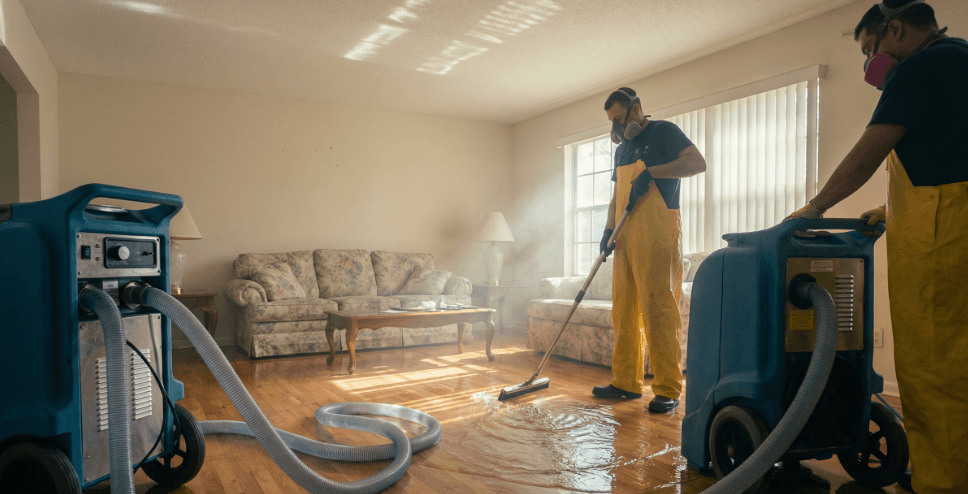
Once the assessment is complete, extraction begins. Industrial-grade pumps and wet vacuums remove standing water quickly. The goal is to reduce moisture levels before secondary damage — including warping, swelling, or mold — can take hold.
After extraction, the structural drying phase begins. This typically involves:
- High-velocity air movers to accelerate evaporation from surfaces and building materials
- Commercial dehumidifiers to pull moisture from the air
- Drying mats or injected airflow systems for subfloors and wall cavities
- Daily moisture monitoring to verify that drying targets are being met
This phase can take three to five days, depending on the extent of damage and the materials involved. Homeowners should expect equipment to run continuously and plan for some disruption to daily routines during this window.
Step 3: Mold Prevention and Monitoring
Mold can begin developing within 24 to 48 hours of water exposure, according to the U.S. Environmental Protection Agency. That’s why mold prevention isn’t a separate project — it’s integrated into every phase of the restoration process.
Antimicrobial treatments are typically applied to affected surfaces after extraction. Technicians monitor moisture readings throughout the drying phase to confirm levels fall below thresholds where mold growth becomes likely. If mold is already present, a structured mold remediation protocol — following IICRC S520 standards — is initiated before reconstruction begins.
When evaluating restoration companies, homeowners should look for IICRC certification. This credential signals that technicians have been trained to recognized industry standards for water damage and mold remediation work.
Step 4: Reconstruction and the Rebuild Phase
Once the structure is fully dry and cleared, reconstruction begins. This phase may involve replacing drywall, flooring, insulation, cabinetry, or other materials that could not be salvaged.
Companies like Bedrock Restoration – Water Fire Mold Damage Service hold a licensed general contractor designation, which means they can manage the full home restoration process — from initial mitigation through final repairs — without transferring the project to a separate contractor. For homeowners already managing the stress of a damage event, having a single team handle everything from assessment to rebuild simplifies coordination and accountability considerably.
Choosing the Right Restoration Partner
The home restoration process moves quickly in the early stages, and delays can lead to greater damage and higher costs. When selecting a professional restoration company, homeowners should prioritize 24/7 emergency availability, IICRC-certified technicians, documented drying logs, and demonstrated experience working directly with insurance carriers. Verified credentials and transparent communication from the start are strong indicators of a company that takes the work seriously.
Water damage is disruptive — but the right restoration team can guide homeowners through the process from start to finish, with clear documentation and accountability at every step.