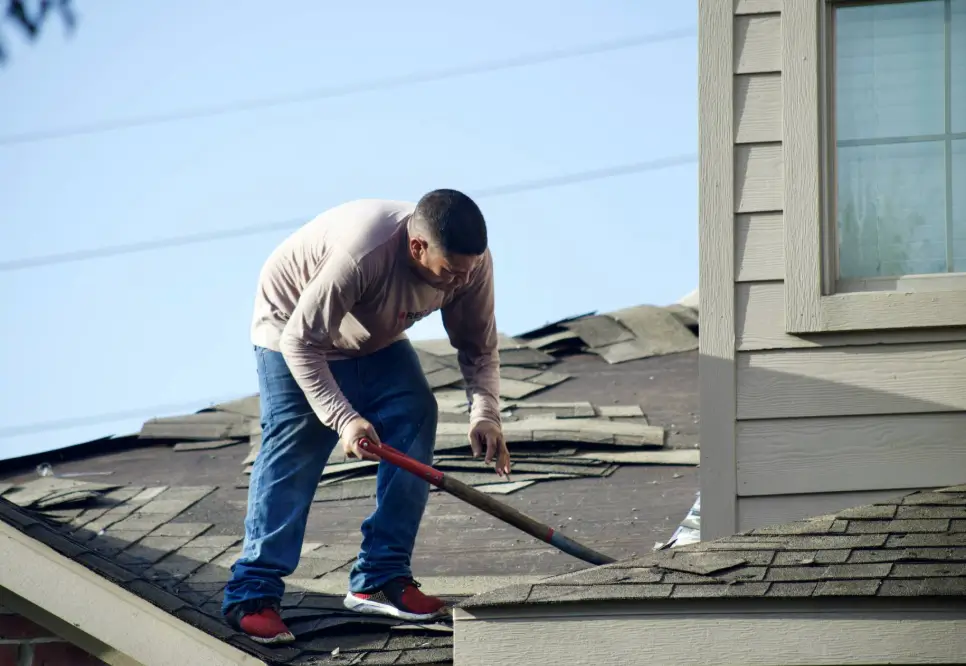
Every year, St. Louis homeowners learn the same lesson the hard way: the roof problems that cause real damage during spring storms didn’t start during the storm. They started months earlier — with a cracked flashing joint nobody noticed, shingles that curled over the winter, or a gutter full of debris that sent water somewhere it was never supposed to go.
Hail, straight-line winds, and heavy downpours can turn a small vulnerability into a full-blown failure in a single afternoon. The good news is that most warning signs are visible well before the first thunderstorm rolls through.
1. Shingles That Are Curling, Cracking, or Missing
Asphalt shingles don’t fail all at once. They deteriorate gradually, and winter accelerates the process. Freeze-thaw cycles weaken the bond between shingle layers and loosen the adhesive strip that keeps them sealed flat.
Walk to the curb and look at your roof from the street. What to watch for:
- Curling edges — shingles lifting or cupping at the corners
- Cracked or split shingles — caused by thermal cycling over multiple winters
- Bare spots where granules have worn away, exposing dark underlayment
- Missing shingles — sometimes blown off by winter winds without anyone noticing
A few curled shingles don’t mean the roof is shot. But those spots are vulnerable to wind uplift and water intrusion, and fixing them before April is far cheaper than dealing with the interior damage that follows.
2. Granule Accumulation in Your Gutters
After winter, check your gutters and downspout discharge areas for dark, sand-like granules. Those granules are the protective coating on asphalt shingles — they shield the underlying material from UV and weather damage.
Some granule loss is normal on newer roofs. But on a roof that’s 12 to 15 years old, heavy granule loss means the shingles are nearing the end of their useful life and are far more susceptible to hail damage. If you’re seeing significant accumulation, a professional assessment can help determine whether targeted repairs or a planned replacement is the smarter move.
3. Damaged or Deteriorating Flashing
Flashing — the metal strips installed around chimneys, vents, skylights, and roof-to-wall transitions — is one of the most common failure points on any roof. A flashing joint that’s pulled away by a quarter inch won’t be visible from the ground, but that gap is an open invitation for water during a driving rain.
Metal expands and contracts with temperature swings, and caulk sealant degrades over time. If the caulk around your chimney flashing is cracked or peeling, or you notice rust streaking, those areas need attention before heavy spring rains. Caught early, flashing repairs are affordable. Left alone, a failing joint sends water down interior wall cavities where you won’t see it until the damage is serious.
4. Sagging or Soft Spots on the Roof Deck
This is the one that should move a homeowner from “I should probably look into this” to “I’m calling someone this week.”
A visible sag in the roofline — even a subtle one — typically means the decking underneath has been compromised by moisture. From inside the attic, look for discoloration, warping, or soft spots in the sheathing. If the wood feels spongy when pressed, there’s moisture damage that needs to be addressed. Homeowners in the St. Louis area who’ve had Conner Roofing inspect their roofs after noticing soft spots often learn the issue started with a small leak that went undetected — something a pre-storm inspection would have caught. A compromised deck is a recipe for structural failure.
5. Clogged Gutters and Poor Drainage
A well-functioning gutter system directs thousands of gallons of water away from the roof edge, fascia, and foundation every year. A clogged system turns all that water into a problem.
When gutters are packed with debris from winter, water backs up along the roof edge — creating ice dams in cold months and standing water that rots fascia boards in spring. Before storm season, clean the gutters and check that downspouts direct water at least four to six feet from the foundation. Gutters pulling away from the fascia or sagging between brackets need attention before the next heavy rain.
A 30-Minute Walk-Around Can Save Thousands
None of these checks require climbing onto the roof. Binoculars, a walk around the perimeter, and a quick attic look can reveal most warning signs that lead to expensive storm damage.
Timing matters. Roofers in the St. Louis area are slammed once storm season starts — everyone calls at once, materials get backordered, and scheduling stretches for weeks. Homeowners who get ahead of that cycle have more options and more control.
A roof doesn’t need to be perfect to perform well in a storm. But it does need to be sound.
Rob Conner is the owner of Conner Roofing, LLC, a women-owned residential roofing company serving the St. Louis area for over 33 years, specializing in roof replacement, repair, gutters, siding, and insurance claims.