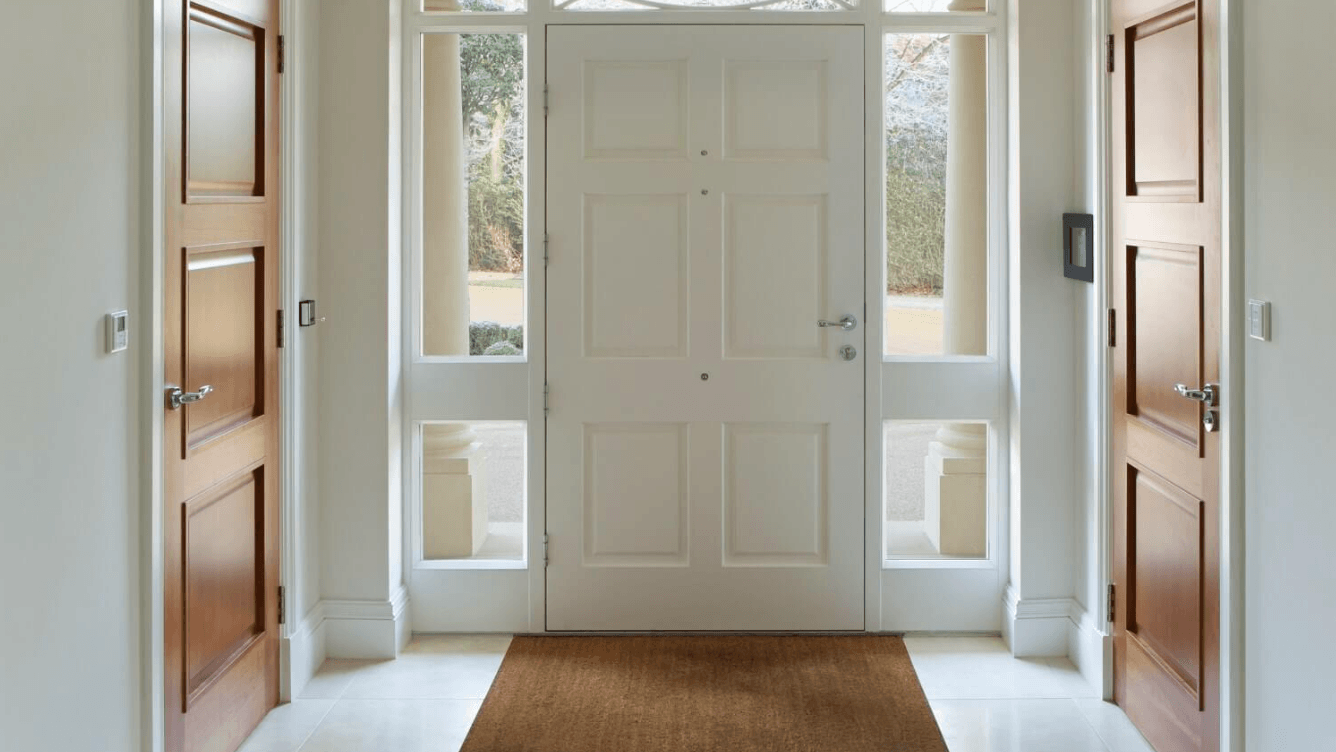
Your front door and windows do more than frame your curb appeal — they’re the barrier between your living space and everything outside it. When they start failing, the signs are often subtle enough to ignore for months or even years. But the longer you wait, the more you pay in comfort, energy costs, and eventually, bigger repairs.
Here are five signs that your doors and windows are telling you something you shouldn’t put off hearing.
Drafts, Fogging, and Other Things You Can Feel (or See)
A cold draft near a closed window is not normal. If you hold your hand near the edges of a window or door on a windy day and feel air moving, the seal has failed. Weatherstripping degrades over time, and wood or vinyl frames can warp just enough to create gaps that are invisible to the eye but obvious to your heating bill.
Fogging or condensation between double-pane glass is another red flag. That moisture means the insulating gas seal has broken. Once that happens, the window has lost a significant chunk of its thermal performance — and no amount of wiping will fix it, because the moisture is trapped inside the unit itself.
Look for these on your own walkthrough:
- Visible daylight around a closed door frame
- Condensation between panes that never clears
- Cold spots near windows during winter, even with the heat running
- Water stains on the sill or wall beneath a window
Any one of these is worth investigating. Two or more together usually means the unit is past its useful life.
Sticking, Jamming, and the “Two-Handed Slam”
Doors and windows should open and close with one hand and minimal effort. If you’ve started shoulder-checking your front door to get it latched, or if your double-hung windows won’t stay open without a prop, the frames have likely shifted.
This happens for a few reasons. Wood swells and contracts with humidity. Older vinyl can become brittle. Foundation settling — even minor settling — can knock frames out of square. The result is hardware that binds, locks that don’t line up, and sashes that rattle in their tracks.
Beyond the daily annoyance, a door or window that doesn’t close properly is a security issue. A latch that doesn’t fully engage is easier to force, and a window that won’t lock is one you’ll eventually stop locking at all.
Rising Energy Bills With No Clear Explanation
If your utility costs have crept up over the past few seasons and you’ve already ruled out the obvious culprits — an aging HVAC system, poor insulation in the attic — your doors and windows deserve a hard look.
According to the U.S. Department of Energy, heat gain and loss through windows accounts for 25 to 30 percent of residential heating and cooling energy use. Older single-pane windows and doors with worn seals force your HVAC system to work harder, and that shows up directly on your bill.
Replacing aging units with modern double- or triple-pane glass and insulated frames can meaningfully reduce that load. It won’t eliminate your energy bill, but it can take the edge off those peak-season spikes.
When to Call a Professional — and What to Ask
Some of these signs overlap, and not every draft means a full replacement. A qualified installer can tell you whether resealing, adjusting hardware, or a full swap makes more sense for your situation.
The team at Mikita Door & Window, a family-owned company on Long Island with over 25 years in the business, recommends that homeowners get an in-person assessment rather than relying on a visual guess. Measurements, frame condition, and the age of the existing units all factor into whether a repair or replacement is the smarter investment.
When you do consult a specialist, ask specifically about frame material options, glass coatings (like Low-E), and whether your existing frames can accept a retrofit insert or need a full-frame tearout. These details affect both the cost and the long-term performance of the job.
Don’t Wait for the Worst-Case Scenario
A failed window seal or a warped entry door isn’t an emergency — until a heavy rainstorm drives water into your wall cavity, or your heating system runs nonstop through a cold snap because half your conditioned air is leaking out. The best time to address these issues is when they’re still inconveniences, not crises.
Walk your home with fresh eyes. Check the seals, test the hardware, and pay attention to how hard your system works to keep you comfortable. If more than one of these signs sounds familiar, it’s worth a conversation with a local door and window specialist who can give you an honest read on where things stand.